Wall Street’s Post-Election Rally
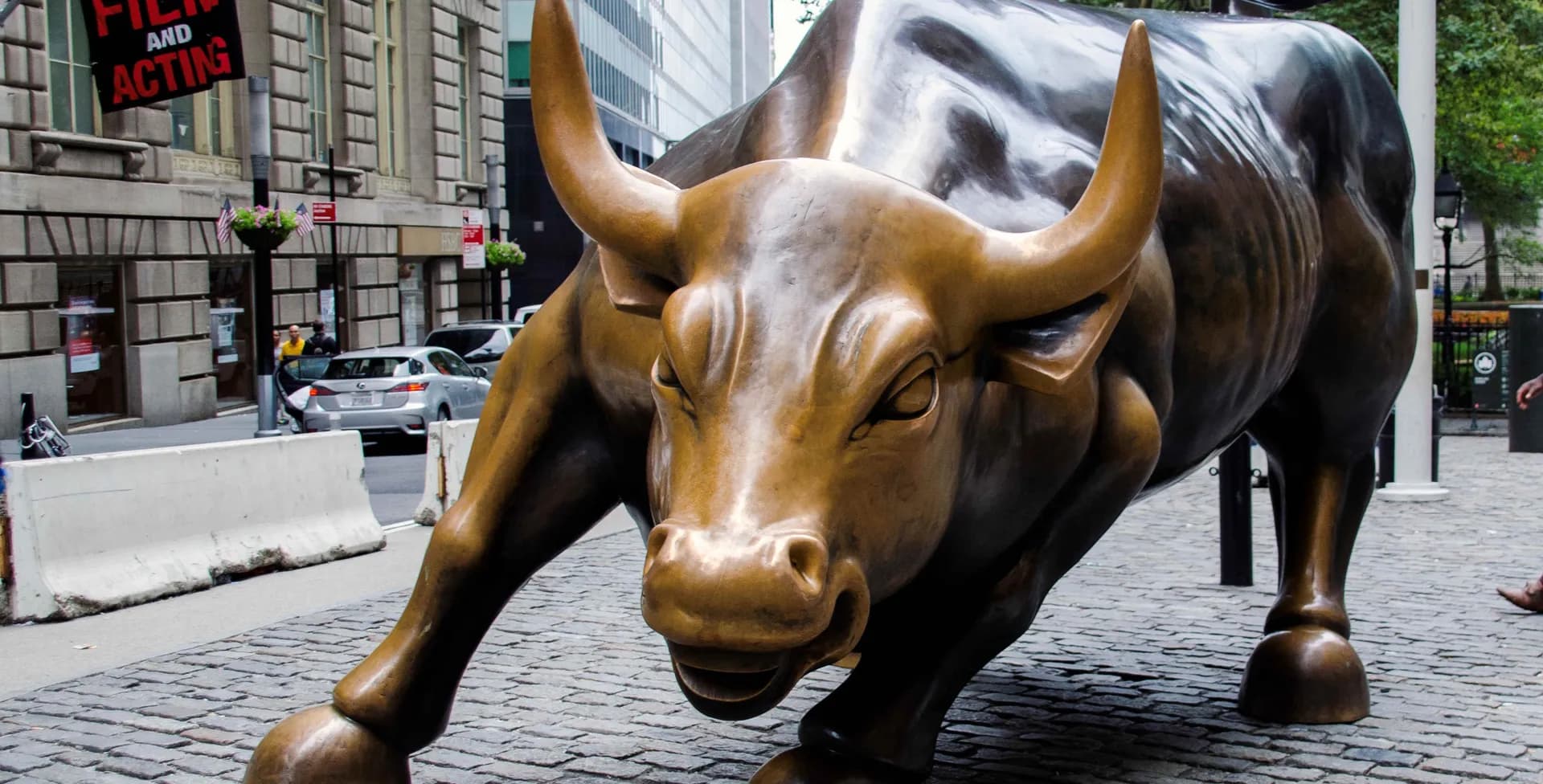
Considering reasons for the post-election rally on Wall Street, what happens next, and what it all means for Apple
I read so many articles Wednesday explaining why things happened the way they happened on Wall Street on Wednesday. While they all agree that Wednesday’s rally - the one that saw the Dow up over 1,500, the NASDAQ up over 360, and Apple up over 17-and-a-half to a new record close of 349.51 - while they all agree that Wednesday’s rally was tied to Tuesday’s US election results, the ones that saw control of the US Congress flip to Democrats… while they all agree that Wednesday’s rally was tied to Tuesday’s US election results, they can’t all say why one led to the other.
Reasons for the Rise
Brian Sozzi - Executive Editor Yahoo! Finance says the markets looked to be trending downward initially. “The thinking,” according to Sozzi:
…was that Democrats are less pro-business than Republicans, and since they will control the House and the Senate, there goes the corporate profit miracle that has driven the markets over the past two years.
But then, not unlike voters, investors went decidedly the other way. One of the possible reasons stated by Sozzi - we’re done with uncertainty for now. Something friend and financial analyst Rob Black has drilled into everyone’s head who will listen - Wall Street hates uncertainty. The way Sozzi sees it:
…with the elections over, the cloud of uncertainty that had begun to seep into markets in recent weeks has been lifted. Now investors can better place their chips where they see fit.
Chips! Clever.
Another reason seen by Sozzi - despite all of the money spent by big tech - including half a billion dollars dropped by Elon Musk, Scozzi thinks hyperscalers (and the investors investing in them) may be breathing a sigh of relief. The way he sees it, this week’s election results could “significantly disrupt AI data center expansion.” That’s thanks to voter anger over “soaring utility bills, grid instability, and water usage…” You know - the little things. A Democratic House and Senate are expected to do a bit of regulatory oversight. That could mean hyperscalers like Google and Amazon can’t spend as much money on data centers, which could mean a boost to free cash flow, which could be rewarded by investors who’ve been spooked by the huge amounts of money being spent with no clear path to ROI. “Free cash flow declines have been at the heart of the latest AI stock sell-off,” writes Scozzi, “so if cash flow outlooks brighten (…) at the biggest companies driving the market, all the better.”
You know, they could’ve just backed away from the ledge. It’s like hyperscalers thought the only thing they could do was keep walking towards the ledge because everybody else their size was walking towards the ledge. Now somebody’s coming to stop them from walking over the ledge - and I can’t help thinking they could’ve just backed away from the ledge.
So, Yahoo! Finance editor Sozzi saw the rally as unexpected. Seeking Alpha (via Apple News) analyst Daniel Jones says he did not:
“…it was a political issue that drove shares higher,” Jones said, noting that voters had decided to repudiate the Trump Administration.
That said, he’s not stoked about the data center implications. The way he sees it, the building of data centers:
“…has been a real driver of what little economic growth we have seen over the last year or so,” (…), warning that it “could further accelerate the collapse of what [he considers] to be the AI bubble that is really driving much of the market returns.”
The market is not the economy.
Elections and Ramifications
There are those who say Tuesday’s election results were a repudiation of the war in Iran. They were a repudiation of big tech. They were a repudiation of high costs of living that just keep getting higher. They were a repudiation of corruption.
I guess they were a lot of things. Still, they served investors well on Wednesday - unless they were heavy in SpaceX and or a number of chipmakers. The tumble for chipmakers makes sense - fewer data centers means fewer processors sold for data centers. As for SpaceX… well… the House and Senate flipped blue on Tuesday, raising the possibility/probability of investigations into Elon Musk and his dealings. Texas also turned blue, which is interesting. Musk moved SpaceX to Texas in 2024 because he didn’t like the Democratic politics/politicians/costs/oversight/whatever in California. Politico had one investigative journalist saying the “entire AI industry made this giant levered bet on the idea that they’d be able to build [data centers] in Texas… This election totally changed that.” Meanwhile another piece from Yahoo! Finance had Yorkville Ives principal Daniel Ives writing that Musk “needs to find the path forward with Texas now with a Democratic win on both the Senate and Governor race.”
Find a way forward with the people he just spent half-a-billion-dollars trying to defeat. Best of luck to everyone.
Back to Cupertino
Looking to Apple specifically - another piece from Yahoo! Finance had Evercore analyst Amit Daryanani considering Apple’s near term prospects in the wake of Tuesday’s “blue wave” election. He actually seems kind of stoked. While there’s reason to worry for heavy hitters in A.I., Ad Rock says:
Apple offers a different earnings driver through iPhone mix/pricing and services rather than data-center construction; our work points to resilient demand, with gross-margin recovery and price elasticity the key tests. This is THE name to keep working when investors want to get defensive.
Plus - this could mean more memory for Apple hardware. Possible relief from RAMnarök. Quoting his note again:
Memory input inflation (DRAM & NAND) has been a sizable headwind for a host of names in our coverage (AAPL for example, talked about [a] headwind in Dec-qtr due to memory (…)). Could a slowdown in [data center] buildouts actually temper memory demand and, in a way, help companies that have been impacted by the sizable memory inflation (AAPL is the key one but there are many others)?
Mr. Daryanani has an “Outperform” rating on Apple shares. His price target on the shares is $380.
What About Washington?
I appreciate how sensibly Daryanani is looking at Apple’s position. I think he should zoom out a tiny bit, though. This past summer, Senator Elizabeth Warren (D-MA) wrote to Apple demanding to know how or whether it planned to return tariff refund money to its customers. Her assumption was that when the administration’s tariffs hit in 2025, Apple passed those increases on to consumers. Thing is, Apple didn’t raise prices due to tariffs. Senator Warren and her staff didn’t know that, but lumped Apple in with Amazon, Target, Walmart, and other companies that apparently did raise their prices on US consumers to cover their tariff costs.
Politicians paint with a broad brush. Daryanani may be right about how things should go for Apple. Whether they’ll go as smoothly as he expects remains to be seen.